
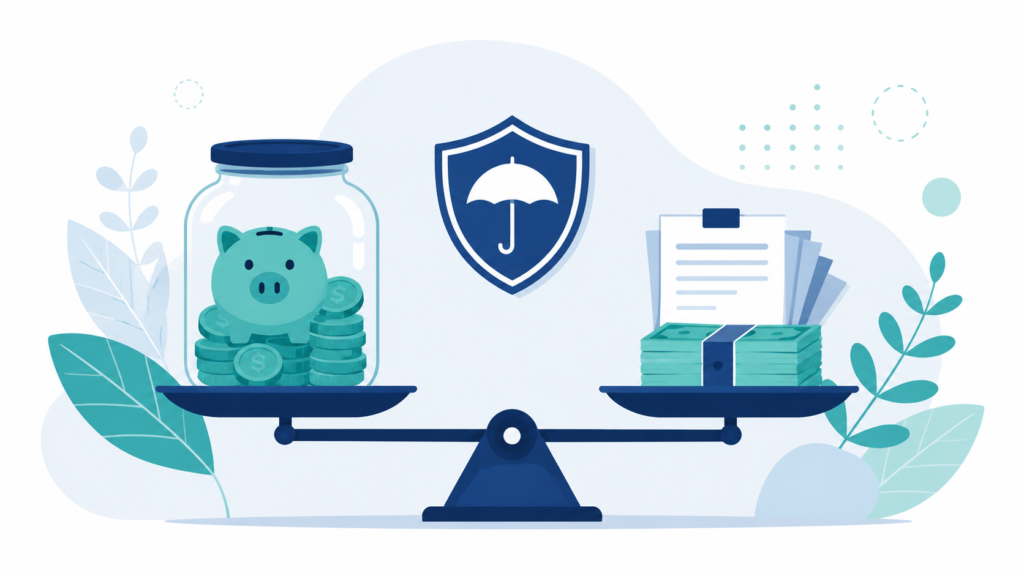
It feels counterintuitive to save money while you’re carrying debt — shouldn’t every extra dollar go toward paying it down faster? In practice, having zero savings while in debt often makes the situation worse, not better, because a single unexpected expense can force you right back into borrowing.
Why You Need Savings Even While in Debt
Without any emergency fund, an unexpected car repair, medical bill, or job disruption typically gets paid for with a credit card or new loan — undoing progress you’ve already made and adding to the very debt you’re trying to eliminate. A modest cash cushion breaks this cycle.
The Starter Emergency Fund: $500-$1,000
You don’t need six months of expenses saved before tackling debt — that’s a longer-term goal for after you’re debt-free. Most financial planners recommend building a smaller “starter” fund first, typically $500-$1,000, specifically to cover small emergencies without reaching for credit.
This amount won’t cover a job loss, but it will cover the kind of expense that most commonly derails a debt payoff plan: a flat tire, a broken appliance, an urgent vet bill.
How to Split Your Extra Money
Once you’ve built that starter fund, most of your extra monthly payment can go back toward debt. A common approach:
- Step 1: Save $500-$1,000 in a separate savings account, prioritizing this before extra debt payments
- Step 2: Once that’s in place, redirect the majority of extra money back to debt, using either the debt snowball or debt avalanche method
- Step 3: Once debt is paid off, redirect that same payment amount into building a full 3-6 month emergency fund
Where to Keep This Money
Keep your starter emergency fund in a separate, easily accessible savings account — not mixed with your checking account (too easy to spend accidentally) and not in a retirement or investment account (too slow to access, and often penalized for early withdrawal). A basic high-yield savings account at a different bank than your everyday checking account works well, since the extra step to transfer money out adds just enough friction to prevent impulsive spending.
What Counts as a Real Emergency
Be honest with yourself about what qualifies. A true emergency is unexpected, necessary, and urgent — a car repair needed to get to work, a medical bill, an emergency home repair. A sale on something you want, or a purchase you could reasonably delay, doesn’t qualify, even if it feels urgent in the moment.
What If You Can’t Save Anything Right Now?
If your budget is stretched too thin to save even a small amount, it may be worth examining whether your current debt payments are unsustainable. This is a common sign that debt consolidation — combining multiple high-interest payments into one lower, more manageable payment — could free up room in your budget for both debt payoff and savings simultaneously.
Does This Delay Getting Out of Debt?
Slightly — but usually only by a few weeks to a couple of months, in exchange for real protection against restarting the debt cycle. Someone with no emergency fund who hits a $600 car repair often ends up right back on a credit card, effectively canceling out months of progress. The small delay upfront is usually worth the stability it buys you.
Checking Your Full Financial Picture
Building both savings and debt payoff into your plan works best when you have a clear view of where you stand. If you haven’t already, it’s worth reviewing our guides on reading your credit report and improving your credit score, especially if you anticipate needing to borrow again in the near future. And if negotiating a lower rate could free up extra room in your budget for savings, see our guide on negotiating a lower interest rate.
The Bottom Line
A small emergency fund isn’t a distraction from paying off debt — it’s what keeps an unexpected expense from turning into new debt. Build a modest cushion first, then put everything else toward becoming debt-free using whichever consolidation or payoff strategy fits your situation best.
Pingback: Personal Loan vs. Credit Card: Which Is Better for Debt Payoff? - BlurbMoney
Pingback: Emergency Fund: How Much You Actually Need - BlurbMoney