Introduction
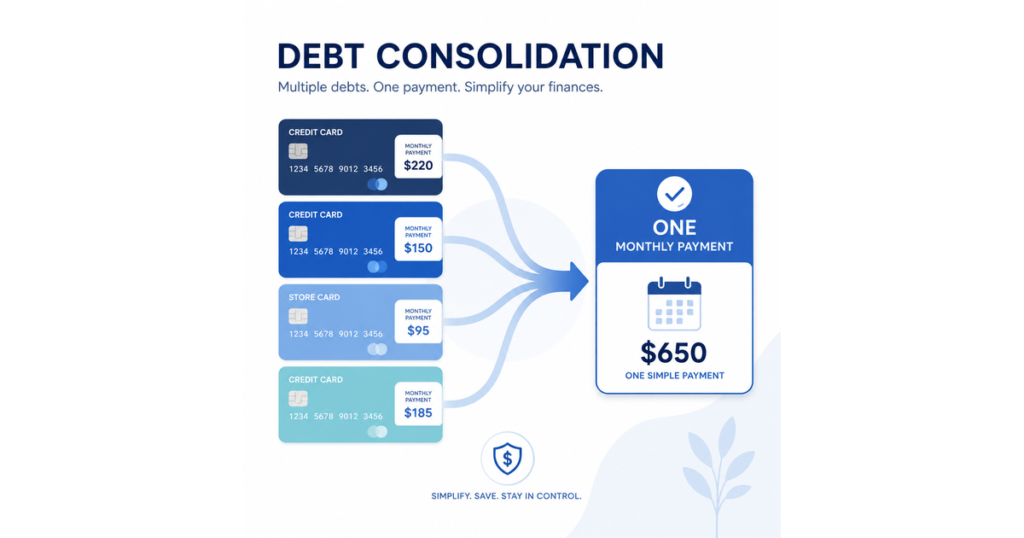
Juggling multiple credit card bills, each with a different due date and interest rate, is exhausting — and expensive. A debt consolidation loan lets you combine several debts into one single monthly payment, often at a lower interest rate. This guide walks through exactly how these loans work, who they’re right for, and how to avoid common mistakes.
What Is a Debt Consolidation Loan?
A debt consolidation loan is a personal loan you use to pay off multiple existing debts — usually credit cards — all at once. Instead of tracking five payments a month, you make one. The loan itself is unsecured (no collateral needed) for most borrowers, and terms typically range from 2 to 7 years.
How It Works
- You apply for a personal loan sized to cover your existing debt
- Once approved, the lender either pays your creditors directly or deposits funds into your account
- You use those funds to pay off your credit cards / other debts
- You now make one fixed monthly payment to your new lender instead of many
When Debt Consolidation Makes Sense
- You have good-to-fair credit (630+) and can qualify for a lower rate than your current cards
- You’re disciplined enough not to rack up new credit card debt after consolidating
- You want predictable, fixed monthly payments instead of variable credit card minimums
When It Doesn’t Make Sense
- Your credit score is too low to get a meaningfully better rate — you could end up paying more
- You haven’t addressed the spending habits that caused the debt in the first place
- The debt is small enough to pay off in a few months without a new loan
Debt Consolidation vs. Balance Transfer Cards
| Debt Consolidation Loan | Balance Transfer Card | |
|---|---|---|
| Interest rate | Fixed, based on credit | 0% intro APR (temporary) |
| Repayment | Fixed monthly payments | Flexible, but rate jumps after intro period |
| Best for | Larger debt, longer payoff | Smaller debt, payoff within 12-18 months |
Steps to Get Started
- Check your credit score — this determines what rates you’ll qualify for
- List out all debts you want to consolidate, with balances and current interest rates
- Compare offers from multiple lenders (rates, fees, terms)
- Choose a loan with a lower rate than your blended current average
- Use the funds to pay off existing debts immediately
- Set up autopay on the new loan to avoid missed payments
Common Mistakes to Avoid
- Taking a longer loan term just to lower monthly payments — this can mean paying more interest overall
- Not closing/reducing use of the credit cards you just paid off, leading to new debt
- Ignoring origination fees, which can eat into your savings
Before you apply, it’s also worth taking a step back and improving your credit score first — even a small boost can help you qualify for a better rate.
Bottom Line
Debt consolidation can be a powerful tool to simplify payments and potentially reduce interest — but only if you qualify for a genuinely better rate and commit to not adding new debt. Compare several lenders before committing, and make sure the math actually works in your favor.
Pingback: How to Improve Your Credit Score Before Applying for a Loan - BlurbMoney
Pingback: Debt Snowball vs. Debt Avalanche: Which Payoff Method Is Right for You? - BlurbMoney
Pingback: Secured vs. Unsecured Loans: What's the Difference? - BlurbMoney
Pingback: 0% APR Balance Transfer Cards: Are They Worth It? - BlurbMoney
Pingback: How to Negotiate a Lower Interest Rate on Your Debt - BlurbMoney
Pingback: How to Build an Emergency Fund While Paying Off Debt - BlurbMoney
Pingback: Personal Loan vs. Credit Card: Which Is Better for Debt Payoff? - BlurbMoney
Pingback: Debt Settlement vs. Debt Consolidation: Which Is Right for You? - BlurbMoney
Pingback: How to Get a Personal Loan with Bad Credit - BlurbMoney
Pingback: How to Read and Understand Your Credit Report - BlurbMoney
Pingback: How Long Does Negative Info Stay on Your Credit Report? - BlurbMoney
excellent very knowledgeable…