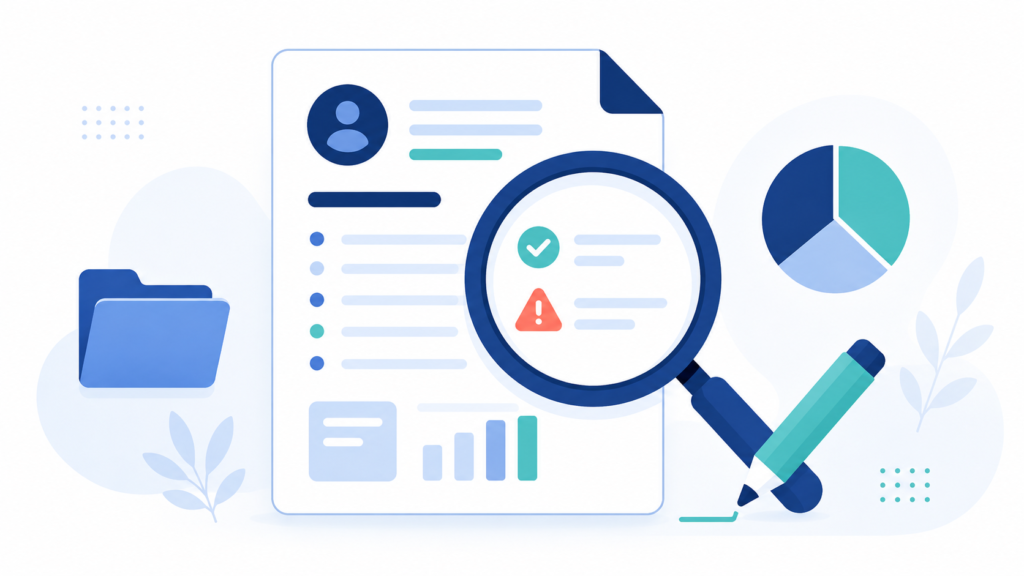
Your credit report is one of the most important financial documents you have, yet most people have never actually read theirs closely. Understanding what’s in it — and knowing how to spot errors — is the first step toward improving your credit and qualifying for better loan terms.
Where to Get Your Credit Report
You’re entitled to a free copy of your credit report from each of the three major bureaus — Equifax, Experian, and TransUnion — through AnnualCreditReport.com. It’s worth checking all three, since information can occasionally differ between bureaus.
Section 1: Personal Information
This section lists your name, current and previous addresses, date of birth, and Social Security number. It’s worth double-checking this section first — if you see an address you never lived at or a name variation that isn’t yours, it could indicate a mixed file (where your report has been merged with someone else’s) or, less commonly, identity theft.
Section 2: Credit Accounts (Tradelines)
This is the core of your report, listing every credit account reported to the bureau — credit cards, personal loans, mortgages, auto loans, and more. For each account, you’ll typically see:
- Account status: open, closed, or in collections
- Payment history: usually shown as a monthly grid indicating on-time or late payments
- Credit limit or original loan amount
- Current balance
- Date opened and date of last activity
This section is where most credit-damaging errors show up — an account that isn’t yours, a balance reported incorrectly, or a payment marked late when it was actually on time.
Section 3: Credit Inquiries
This section is split into two types:
- Hard inquiries: triggered when you apply for credit (a loan, credit card, etc.). These can slightly lower your score and stay on your report for about two years.
- Soft inquiries: triggered by things like checking your own score, or when a lender pre-screens you for an offer. These don’t affect your score at all.
If you see hard inquiries you don’t recognize, it’s worth investigating — it could indicate someone applied for credit using your information.
Section 4: Public Records and Collections
This section includes bankruptcies, tax liens, civil judgments, and accounts sent to collections. These are some of the most damaging items on a credit report and can stay on file for 7-10 years depending on the type. If you see a collections account you don’t recognize or believe is inaccurate, you have the right to dispute it directly with the credit bureau.
What This Report Does NOT Include
Your credit report does not include your actual credit score — that’s calculated separately using the data in the report. It also won’t show your income, bank account balances, or checking/savings account activity.
How to Dispute an Error
If you spot an inaccuracy, you can file a dispute directly with the credit bureau reporting it, either online or by mail. The bureau is required to investigate and respond, typically within 30 days. Keep documentation (statements, payment confirmations) ready to support your dispute.
Why This Matters Before You Apply for a Loan
Catching and correcting errors before you apply for credit can meaningfully improve your approval odds and the rate you’re offered. For a deeper look at raising your score specifically, see our guide on improving your credit score before applying for a loan. And if you’re not sure where your score currently stands relative to lender requirements, our guide on getting a personal loan with bad credit breaks down what different score ranges mean for your options.
The Bottom Line
Reading your credit report doesn’t need to be intimidating — it’s really just four sections: your personal info, your accounts, your inquiries, and any public records. Reviewing it a few times a year, especially before applying for credit, is one of the simplest habits you can build to protect and improve your financial standing. If you’re managing multiple accounts and considering simplifying them, see our guides on debt consolidation loans and how debt consolidation affects your credit score, or compare payoff strategies with our debt snowball vs. debt avalanche guide.
Pingback: How Long Does Negative Info Stay on Your Credit Report? - BlurbMoney
Pingback: 0% APR Balance Transfer Cards: Are They Worth It? - BlurbMoney
Pingback: Student Loan Refinancing: Is It Worth It? - BlurbMoney
Pingback: Personal Loan vs. Credit Card: Which Is Better for Debt Payoff? - BlurbMoney