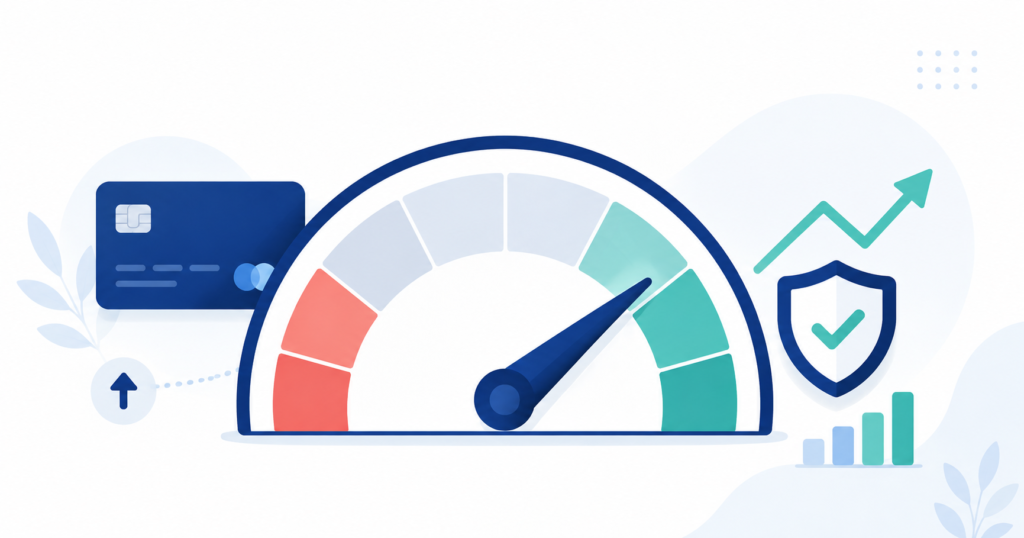
Your credit score is one of the biggest factors lenders use to decide whether to approve your loan application — and what interest rate to offer you. Even a modest improvement in your score, made in the weeks before you apply, can mean the difference between approval and rejection, or between a competitive rate and a costly one.
Here’s what actually moves the needle, and how long each step realistically takes to show results.
1. Check Your Credit Report for Errors
Before doing anything else, pull your credit report and look for mistakes — incorrect account balances, accounts that aren’t yours, or late payments that were actually made on time. Errors are more common than most people expect, and disputing them can raise your score within a few weeks once corrected.
2. Pay Down Credit Card Balances
Your credit utilization ratio — how much of your available credit you’re using — is one of the fastest levers you can pull. Lenders generally like to see utilization below 30%, and below 10% is even better. If you have $5,000 in available credit and carry a $2,000 balance, paying it down to $500 can noticeably improve your score within a single billing cycle.
3. Avoid Opening New Credit Accounts Right Before Applying
Each new credit application triggers a hard inquiry, which can temporarily lower your score by a few points. Opening a new credit card or store account in the months before a loan application isn’t worth the short-term dip — save that for after your loan is approved.
4. Keep Old Accounts Open
The length of your credit history matters. Closing an old credit card, even one you don’t use often, can shorten your average account age and hurt your score. Unless it carries a high annual fee, it’s usually better to keep old accounts open and simply not use them.
5. Make Every Payment on Time — Especially Now
Payment history is the single largest factor in most credit scoring models. If you’re planning to apply for a loan in the next few months, this is not the time to let any bill slip, even a small one. Consider setting up autopay for at least the minimum due on every account.
6. Consider a Rapid Rescore (If You’re Close to Applying)
If you’ve just paid down debt or corrected an error and need your improved score to reflect quickly, some lenders offer a “rapid rescore” service through the credit bureaus — typically for a small fee. This can update your score in days rather than the usual 30-45 day reporting cycle.
How Long Should You Wait Before Applying?
If your score needs significant work, give yourself at least 2-3 months before applying. If you’re only fine-tuning — paying down a card or fixing a reporting error — a few weeks is often enough to see a meaningful bump.
The Bottom Line
A better credit score doesn’t just improve your odds of approval — it directly lowers the interest rate you’ll pay over the life of the loan. Spending even a month tightening up your credit profile before you apply can be one of the highest-value financial moves you make this year.
If you’re juggling multiple debts, you may also want to read our guide to debt consolidation loans.
Pingback: Debt Consolidation Loans: The Complete Guide for 2026 - BlurbMoney
Pingback: How to Get a Personal Loan with Bad Credit - BlurbMoney
Pingback: How Debt Consolidation Affects Your Credit Score - BlurbMoney
Excellent… well understood..
Very Clear.. Everyone to read this before applying for a Loan.
Great 👍
Pingback: How to Read and Understand Your Credit Report - BlurbMoney
Pingback: Student Loan Refinancing: Is It Worth It? - BlurbMoney
Pingback: Secured vs. Unsecured Loans: What's the Difference? - BlurbMoney
Pingback: How Long Does Negative Info Stay on Your Credit Report? - BlurbMoney
Pingback: Fixed or Adjustable: Which Mortgage Rate to Choose - BlurbMoney