If you’re considering a debt consolidation loan, one of the most common concerns is what it will do to your credit score. The honest answer is: it depends on how you do it, and your score will likely move in more than one direction before it settles somewhere better than where you started.
The Short-Term Dip: What Happens Right Away
When you apply for a debt consolidation loan, the lender runs a hard inquiry on your credit report. This typically causes a small, temporary drop — usually just a few points — and stays on your report for about two years, though its impact fades well before that.
If you’re rate-shopping across multiple lenders, most credit scoring models treat multiple inquiries for the same type of loan within a short window (usually 14-45 days) as a single inquiry, so it’s safe to compare a few offers without repeatedly damaging your score.
Your Credit Utilization Often Improves
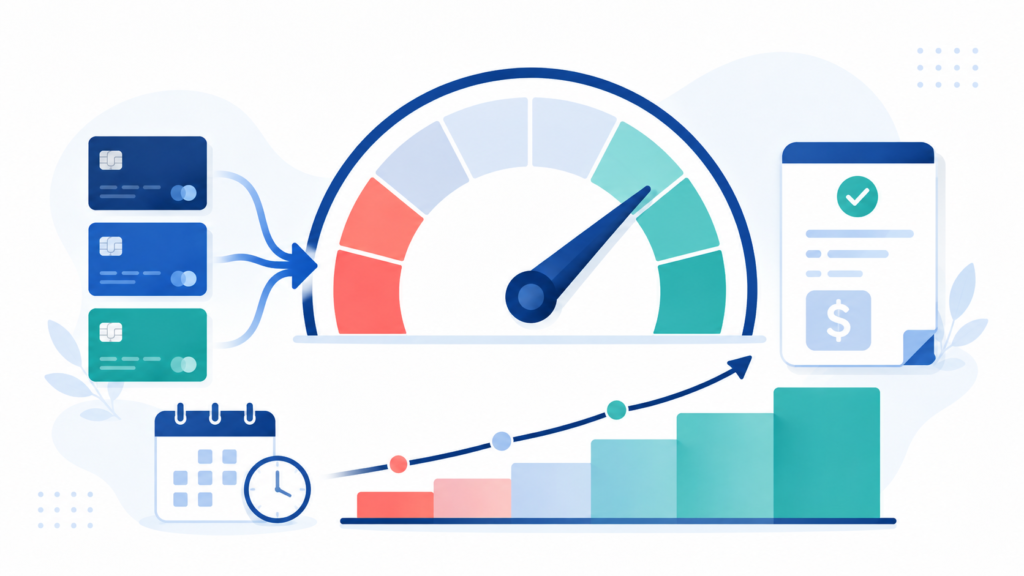
This is where debt consolidation tends to help. If you’re using a personal loan to pay off multiple credit cards, your credit utilization ratio — the percentage of available revolving credit you’re using — usually drops significantly, since installment loans (like personal loans) aren’t factored into utilization the way credit card balances are.
Lower utilization is one of the fastest ways to see your score improve, sometimes within a single billing cycle after your cards are paid off.
Your Credit Mix May Improve Too
Credit scoring models like to see a mix of credit types — revolving credit (cards) and installment credit (loans). If your credit history has been mostly cards, adding an installment loan through consolidation can add a small positive factor to your score.
Average Account Age: Handle With Care
Here’s where people sometimes get consolidation wrong. If you close your credit cards immediately after paying them off through consolidation, you shorten your average account age — a factor that matters for your score. Unless a card carries a high annual fee, it’s usually smarter to keep it open (even unused) rather than closing it right away.
Missed Payments Can Undo the Benefits Quickly
A consolidation loan only helps if you actually make the payments. Since payment history is the single largest factor in most scoring models, missing payments on your new consolidated loan will hurt your score more than any improvement from lower utilization or better credit mix.
What the Timeline Usually Looks Like
- Week 1: Small dip from the hard inquiry
- Weeks 2-8: Score often recovers and begins climbing as credit card balances are paid off and utilization drops
- Months 3-12: Steady improvement as you build a positive payment history on the new loan and your credit mix improves
Most people who consolidate responsibly see their score higher than where they started within 3-6 months, though individual results vary based on your full credit profile.
Before You Consolidate
It’s worth checking your current standing first — see our guide on improving your credit score before applying for a loan to put yourself in the strongest position when you apply. And if you’re weighing consolidation against paying off debts individually, our comparison of the debt snowball vs. debt avalanche methods can help you decide which approach fits your situation. If your credit is already on the lower end, it’s also worth reading our guide on getting a personal loan with bad credit, since some of the same lenders and strategies apply to consolidation loans too.
The Bottom Line
Debt consolidation typically causes a small, temporary dip followed by steady improvement — as long as you keep old accounts open, make every payment on time, and avoid running your paid-off credit cards back up. For a full walkthrough of how consolidation loans work, see our complete guide to debt consolidation loans.
Pingback: How Long Does Negative Info Stay on Your Credit Report? - BlurbMoney
Pingback: How to Build an Emergency Fund While Paying Off Debt - BlurbMoney
Pingback: How to Read and Understand Your Credit Report - BlurbMoney
Pingback: Personal Loan vs. Credit Card: Which Is Better for Debt Payoff? - BlurbMoney